Giving God the First Fruits: What It Means to Put Him First
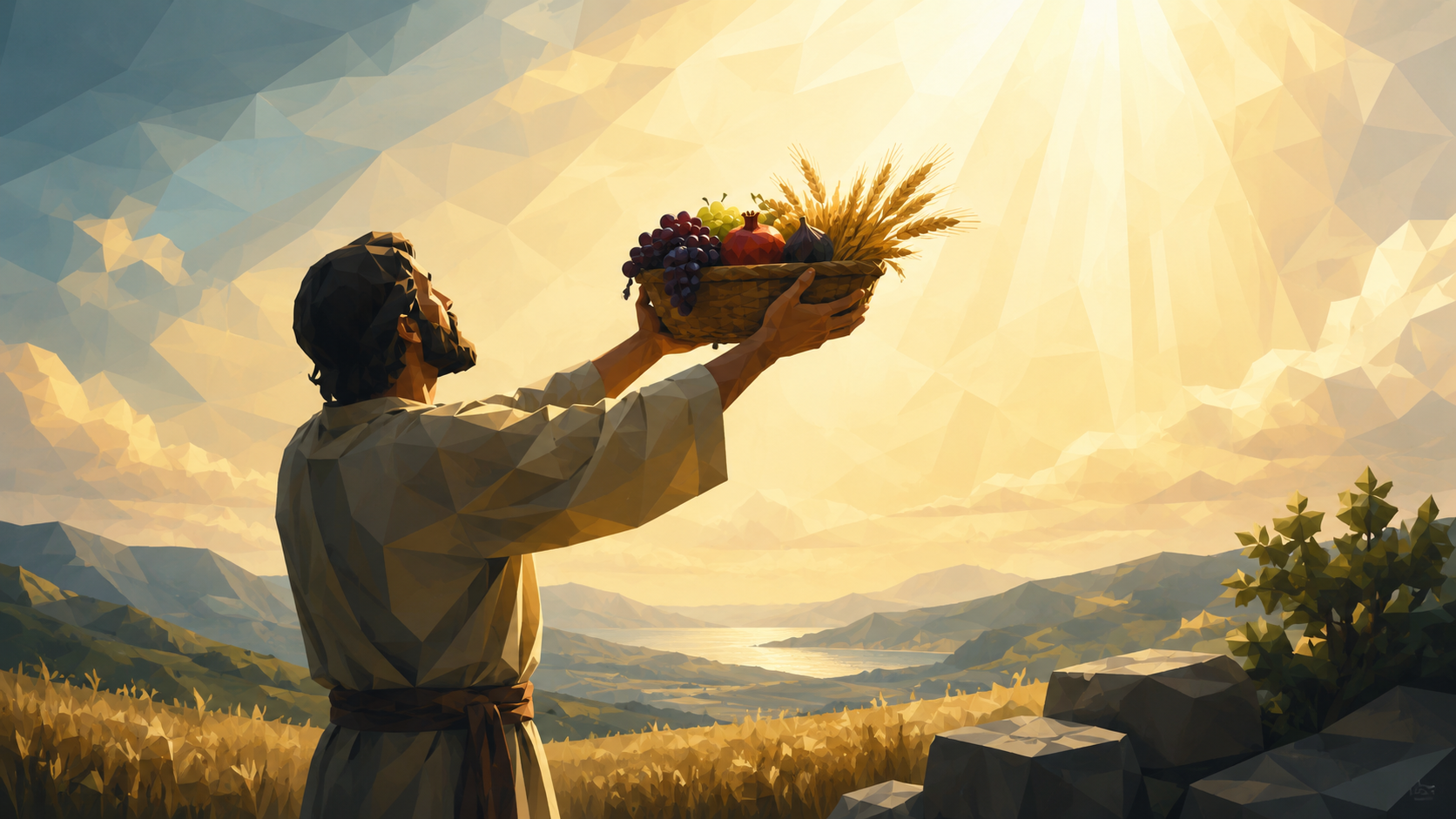
Giving God your first fruits means honoring Him with the first and best of what He provides. Biblically, first fruits were the first portion of the harvest offered in gratitude and trust. Today, the principle can shape how we approach money, time, opportunities, abilities, relationships, and new seasons by placing them under God’s authority before using them for ourselves.
A priest once went to visit a billionaire in his palace. As they sat together enjoying tea, the priest noticed that the man was overflowing with joy.
Curious, he asked, “I couldn’t help but notice how happy you are. May I ask what has brought you such joy?”
The billionaire smiled and said, “It’s the shirt I’m wearing.”
The priest was confused. The shirt looked ordinary and probably cost less than one hundred dollars. This man could have owned endless shirts made from the finest materials, yet he treasured this simple one.
The billionaire explained, “My son just got his first job. When he received his first paycheck, the first thing he did was buy this shirt for me.”
Then he said, “This shirt means more to me than all the wealth I own, because my son remembered his father first. To me, this is the most valuable thing I have.”
The point was not the price of the shirt, but the heart behind the gift. The father was not impressed by how much money his son earned or by the job he had. What moved him was his son’s love. His son had remembered him first.
Now imagine if the son had done something different. What if he had donated thousands of dollars to his father’s organization, then bragged about how much money he had made?
Would the father’s reaction have been the same?
God Is Seeking the Heart Behind the Gift
When we bring God the first of what we have received, we are saying with our lives, “Father, before I think of myself, build my own comfort, or celebrate what has come into my hands, I remember You.” First fruits are not merely about giving something early. They are about placing God first in our affection, gratitude, trust, and priorities. They reveal that He is not an afterthought added to the end of our plans, but the One we acknowledge at the beginning.
What brought the billionaire such joy was not the monetary value of the shirt, but what it revealed about his son’s heart. As a billionaire, he could have purchased any shirt he wanted.
What he could not purchase was his son’s willing love. He could not force his son to think of him first or manufacture genuine devotion. The value of the shirt came from the fact that his son freely remembered him before spending the money on himself.
In an infinitely greater way, God desires willing love and devotion from His people. He does not need our money, time, abilities, or possessions, because everything already belongs to Him. Psalm 24:1 declares, “The earth is the Lord’s, and everything in it.” Yet God delights when our giving reveals a heart that remembers Him, honors Him, and recognizes that every good thing has come from His hand.
This is why a small offering can carry great spiritual meaning. Its value is not measured only by its size, but by the love, faith, gratitude, and surrender behind it. God is not impressed by outward generosity that seeks recognition while the heart remains distant. He is pleased by the person who says, “Lord, You are first because You are worthy, and everything I have is already Yours.”
What Are First Fruits?
Biblically, first fruits were the first and best portion of the harvest that God’s people offered to Him. They were not leftovers gathered after every other need had been met. They came from the beginning of the increase, before the rest of the harvest was consumed or distributed. By giving this first portion, the Israelites acknowledged that the entire harvest had come from God and remained under His lordship.
Proverbs 3:9–10 says, “Honor the Lord with your wealth, with the firstfruits of all your crops.” The emphasis is not merely on giving, but on honoring God first. The offering expressed gratitude for what He had already provided and trust that He would faithfully sustain what remained. In this way, first fruits were an expression of faith as well as thanksgiving.
A helpful modern way to understand the principle is this: first fruits are the first taste of any increase God brings into your life. Whenever something new comes into your hands—a financial increase, opportunity, developing ability, meaningful relationship, or new season—the first-fruits principle asks how God will be acknowledged before the gift is consumed or used for yourself.
The central idea is not simply, “When I receive more, God should receive something too.” It goes deeper. First fruits mean that God receives priority before we spend, celebrate, plan, or take possession. Instead of asking what remains for God after our desires have been satisfied, we ask, “How can I honor God first with what He has placed in my hands?” It is a posture that remembers the Giver before enjoying the gift.
Giving God the First Fruits of Our Finances
When we receive a paycheck, raise, bonus, refund, inheritance, or unexpected increase, our minds often move immediately toward what the money can do for us. We may think about a vacation, a larger home, a newer car, or bills we can finally pay. None of these things is automatically wrong. The deeper question is whether God is acknowledged before our desires take control.
Giving God the first fruits of our finances may begin by pausing before spending and setting apart a portion to honor Him. That pause becomes an act of worship because it reminds us that the increase did not ultimately begin with us. It came through God’s provision.
However, first fruits should not be reduced to, “I gave God the first one hundred dollars, so the rest is mine to use however I want.” Giving a first portion is meaningful, but it also declares that the entire increase belongs under God’s lordship. We are not purchasing the right to control the remainder independently of Him.
A surrendered heart prays, “Lord, this came from You. How should I give, save, spend, invest, or use it in a way that honors You?” The answer may include generosity, paying down debt, preparing wisely for the future, caring for family, meeting a need, or enjoying part of God’s provision with gratitude. The issue is not whether every dollar must be donated, but whether every dollar is surrendered.
First fruits therefore become an expression of yielding. Rather than letting money place our desires in the driver’s seat, we invite God to lead. Money becomes more than something we possess; it becomes something we steward for the glory of the One who provided it.
Giving God the First Fruits of New Opportunities
When a new job, promotion, business opportunity, platform, or open door appears, our first instinct may be to ask what we can gain from it. We think about higher income, greater influence, recognition, or comfort. Giving God the first fruits of an opportunity means placing it before Him before ambition takes over.
Instead of immediately saying yes because the opportunity looks promising, we pause and pray, “Lord, is this from You? What do You want me to do with it?” That first response reveals whether we see the opportunity as something to possess for ourselves or something to steward under God’s direction.
Honoring God may mean asking how the opportunity can serve His purposes. A promotion may provide greater influence. A business may create jobs, meet needs, and model integrity. A growing platform may allow us to encourage others or point people toward truth. The question shifts from “How much can I gain?” to “How can God be glorified through this?”
Sometimes surrender also means refusing an opportunity. Not every open door is one God intends us to enter. An opportunity may offer money or visibility while requiring dishonesty, moral compromise, neglect of family, or abandonment of spiritual responsibilities. Obedience must remain more valuable than advancement.
We can also honor God through the first benefits of an opportunity—by blessing others, supporting ministry, meeting a need, or acknowledging His faithfulness rather than taking all the credit. A surrendered opportunity remains open to God’s direction. He may guide it, reshape it, delay it, or close it. Our first response becomes, “Lord, what do You want me to do with this?” rather than, “How much can I get from it?”
Giving God the First Fruits of Our Abilities
When we discover or develop an ability, it is easy to think about the recognition, profit, influence, or personal fulfillment it might bring. Giving God the first fruits of our abilities means offering the gift back to Him before making personal success its highest purpose. We say, “Lord, You gave me this ability. Teach me to use it in a way that reflects Your character, serves others, and brings You glory.”
A musician may use that gift in worship or create music that communicates what is true and beautiful. A writer may teach, encourage, defend truth, or bring clarity. A leader can use influence to care for people rather than control them. A businessperson can operate honestly, treat others fairly, create something useful, and practice generosity.
Giving God our first fruits also means offering Him our best rather than whatever remains after we have pursued everything else. We should not give our greatest energy and excellence to personal ambition while offering God distracted leftovers. Colossians 3:23 teaches, “Whatever you do, work at it with all your heart, as working for the Lord.”
This does not mean every ability must be used only inside a church building or attached to an explicitly religious project. A consecrated gift can honor God in an office, classroom, studio, hospital, kitchen, business, or home. The deeper question is whether the ability has been surrendered to Him and exercised with humility, integrity, excellence, and love.
God may also lead us away from opportunities that would misuse the gift, feed our pride, or require compromise. He may ask us to serve quietly where there is little recognition. The surrendered heart asks not only, “How can this gift make me successful?” but, “How can this gift become an expression of love, obedience, and faithful stewardship?”
Giving God the First Fruits of Our Relationships
When God brings a new friendship, dating relationship, marriage, child, ministry connection, or business relationship into our lives, it is easy to focus on the joy, opportunity, security, or belonging it provides. Giving God the first fruits of a relationship means inviting Him into it from the beginning rather than turning to Him only after problems develop.
This begins with prayer. Instead of immediately trying to shape the relationship into what we want, we pray for the other person and ask God how we should love them. Prayer moves us from control to stewardship. It reminds us that the person does not exist merely to meet our needs or fulfill our plans.
Giving God first place also means establishing godly boundaries early. In dating, this may involve honoring biblical standards of purity and refusing to let emotion outrun wisdom. In friendship, ministry, or business, it may mean practicing honesty, setting clear expectations, and rejecting manipulation. Boundaries are not a lack of love; they help protect love from becoming controlling or compromising.
We must also refuse to make another person an idol. Even good relationships become spiritually dangerous when we look to them for the identity, security, worth, or fulfillment that only God can provide. Giving God first place means loving people deeply without making them ultimate.
A surrendered relationship asks, “How can this connection glorify God?” We bring gratitude instead of entitlement, honesty instead of concealment, forgiveness instead of bitterness, and service instead of self-centeredness. In this sense, the first fruits of a relationship mean that it begins under God’s authority rather than being brought to Him only after confusion, disappointment, or conflict has already taken root.
Giving God the First Fruits of a New Season
A new season may arrive through marriage, parenthood, retirement, recovery, a move, career change, financial growth, grief, or suffering. Some seasons feel like answered prayer, while others feel painful and disorienting. Giving God the first fruits of a new season means offering Him its beginning before we define it entirely by comfort, success, fear, or loss.
The first response should be prayer and surrender: “Lord, how do You want me to walk through this?” Instead of rushing to control what comes next, we invite God to lead our decisions, shape our desires, correct our assumptions, and teach us to trust Him in unfamiliar circumstances.
New seasons often require new spiritual rhythms. Marriage changes how time is shared. Parenthood may disrupt familiar routines. Retirement may create freedom but also a loss of structure. Grief can affect concentration and energy. A demanding career change may crowd out prayer and Scripture. Giving God the first fruits of the season means intentionally building rhythms of worship, Scripture, prayer, fellowship, and rest before other demands consume all the available space.
A surrendered heart also asks what God may be teaching. In growth, He may teach humility and stewardship. In suffering, He may deepen endurance, dependence, compassion, and hope. In transition, He may expose where our identity has become attached to a role, place, income, or relationship.
Most importantly, we give God the first decisions rather than making every plan independently and asking Him to bless what has already been settled. Whether the season brings joy or sorrow, increase or limitation, the first-fruits response remains: “Lord, this season belongs to You. Lead me in it, form me through it, and let my life honor You from the beginning.”
Giving God the First Fruits of Our Time
Of all these applications, time may be the most universal. Financial increases, new opportunities, relationships, abilities, and major life transitions may come only occasionally. But every morning we wake up, we receive another measure of time and another opportunity to acknowledge God first.
Giving God the first fruits of our time can begin when we first become conscious in the morning. Before our minds are consumed by our phones, responsibilities, worries, or plans, we intentionally turn our attention toward Him. This may take the form of prayer, thanksgiving, Scripture, worship, or a simple acknowledgment: “Father, thank You for another day. This day belongs to You. Lead me in it.”
This should not become a rigid rule in which every believer must follow the same morning routine. A parent caring for an infant may have a very different morning from someone who lives alone or is retired. The deeper principle is priority: before the world begins making demands on our attention, we remember the One who gave us the day.
Yet giving God the first fruits of our time does not mean spending a few minutes with Him and then living independently until tomorrow. Morning devotion is not a spiritual transaction that checks God off the schedule. We begin with God so that we may continue with God.
Throughout the day, we can seek His wisdom before decisions, turn to Him before difficult conversations, thank Him for unexpected blessings, confess sinful attitudes, and ask for strength when overwhelmed. God should receive our first attention, our best attention, and our continuing attention—not merely the leftovers of our time.
The first fruits of our time begin when our first conscious attention belongs to God, but they continue as we surrender the whole day to Him. We are saying, “Lord, because the beginning belongs to You, let everything that follows remain under Your direction.”
From Possession to Consecration
First fruits mean that whenever God brings something new into our lives, our first response is not merely possession, but consecration. Instead of asking first, “How can I use this for myself?” we learn to ask, “Lord, how can this honor You?”
Consecration means willingly placing something under God’s authority and setting it apart for His purposes. This does not mean we cannot benefit from or enjoy what He gives. Scripture presents God’s gifts as blessings to be received with thanksgiving. The problem arises when enjoyment becomes ownership without surrender—when we receive the gift but forget the Giver.
At the same time, these examples are applications of the biblical first-fruits principle, not direct commands requiring Christians to perform a specific ritual whenever they begin a friendship, receive a promotion, discover an ability, or enter a new season. We should not turn a meaningful principle into a rigid law that Scripture does not impose. Doing so could burden believers with rules God has not commanded or suggest that His favor must be earned through a formula.
The enduring truth is that God deserves priority, gratitude, trust, and the best of what He gives us. The Old Testament offering of first fruits revealed a heart that recognized God as the source and Lord of the whole harvest. That same posture remains relevant today.
The expression may differ from person to person. It may involve setting aside a portion of financial increase, dedicating the beginning of the day to prayer, surrendering an opportunity before accepting it, establishing godly boundaries in a new relationship, or seeking God before making the first decisions of a new season. The form may vary, but the heart remains the same: “Lord, this came from You. It belongs under Your lordship. Show me how to use it for Your glory.”
First fruits are not primarily a technique for receiving greater blessing. They are an expression of worship. They train us to remember God first, trust Him with what follows, and receive every good gift with gratitude and surrender.