Why Jesus Compared the Kingdom of Heaven to a Mustard Seed
Jesus compared the Kingdom of Heaven to a mustard seed because His Kingdom often begins in ways that appear small, hidden, or insignificant—but under God’s power it grows into something far greater than anyone expects. What starts with humble beginnings through Christ and a small group of disciples ultimately expands across the world, bringing life, refuge, and transformation to many.
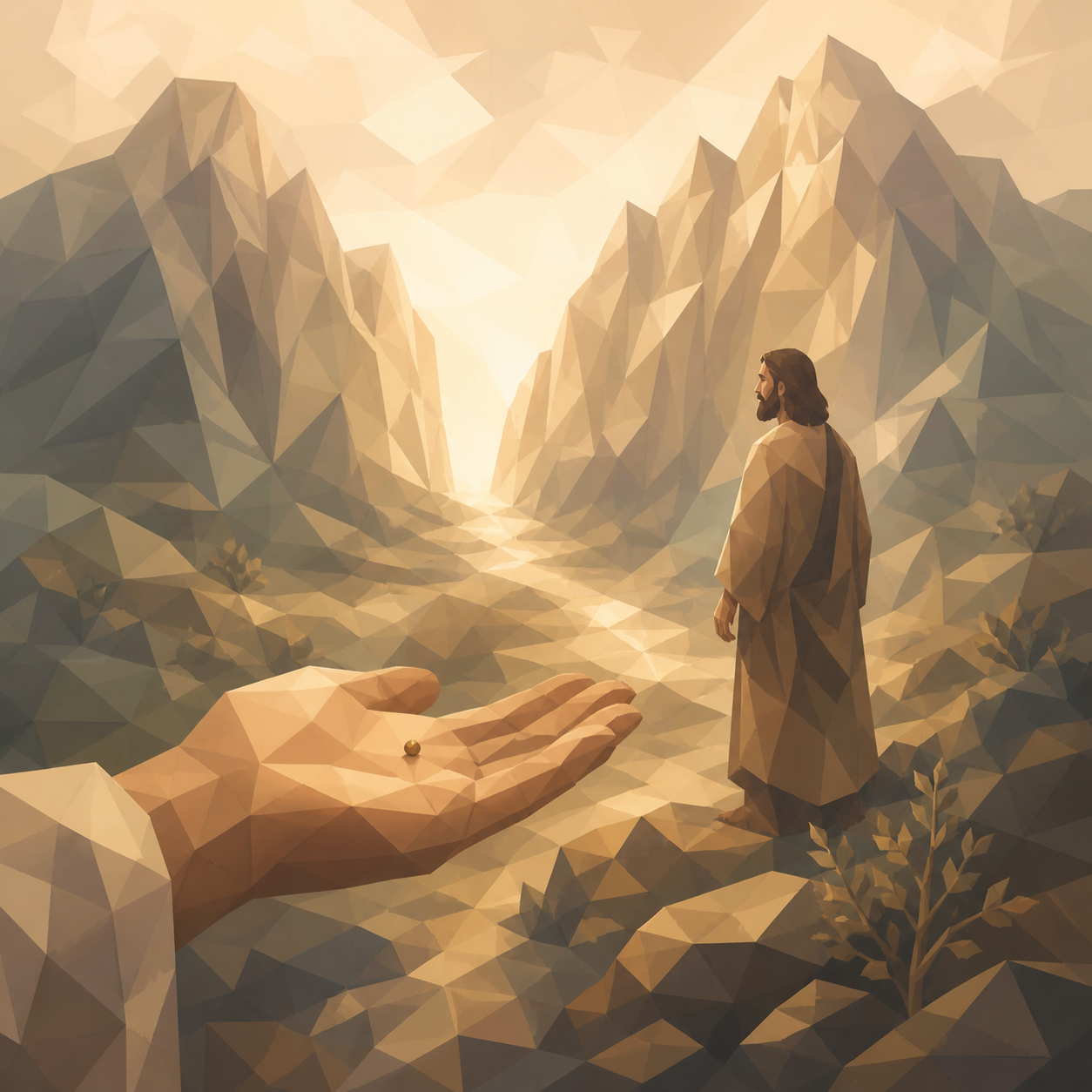
When Jesus compared the Kingdom of Heaven to a mustard seed, He was intentionally confronting the expectations of His audience. Many in Israel were looking for a Messiah who would arrive with visible dominance—political authority, national restoration, and immediate victory over Rome.
They weren’t wrong to expect a conquering King in the big picture, but they could not reconcile that expectation with the way Jesus actually came: born in a manger, raised in Nazareth, known as a carpenter’s son, traveling humbly, serving others—even washing His disciples’ feet—and ultimately dying a criminal’s death on a cross. In their minds, that kind of “smallness” could not possibly be the arrival of God’s Kingdom.
But Jesus makes the point unmistakable: God’s Kingdom begins in a way that feels almost weightless—“like something you could lose between your fingers.” This directly undercuts how humans assume God should work. We expect God to begin with what is impressive, unmistakable, and immediately powerful.
Yet Jesus reveals the pattern of heaven: the Kingdom starts hidden, small, and easily overlooked before it becomes undeniable. And when we compare His first coming with His second—where Revelation describes Him clothed in radiant authority, eyes like fire, crowned, and returning as Judge and Warrior—we see the full arc: the Kingdom that begins in humility will end in glory. God does not start where we would choose to start; He starts small on purpose, so it becomes clear that the power belongs to Him.
The Hidden Growth of the Kingdom
The mustard seed must first be planted. Once it enters the soil, it disappears underground. For a time, nothing is visible—no fanfare, no spectacle, no announcement. Yet beneath the surface, something powerful is happening. It is quietly growing out of sight. This is how the Kingdom of God advances. It grows invisibly before it grows visibly. What looks like stillness is often sacred development. What appears insignificant is often divine preparation.
This pattern mirrors Jesus’ own ministry. A carpenter from Nazareth, thirty hidden years, a small group of disciples, and a cross that seemed like defeat—yet through His resurrection, that unseen work burst into a worldwide Kingdom. The same was true of the disciples—uneducated fishermen who became the foundation of a global movement—and the early church, which began as a small, frightened gathering with no buildings, no influence, and no power, yet spread across the Roman Empire through quiet faithfulness and Spirit-empowered witness. The Kingdom often grows in hidden places first. And that is a massive encouragement for believers who feel unnoticed, ineffective, or spiritually small. If you feel buried, you may actually be planted.
From Garden Plant to “Tree”: The Disproportionate Power of God
Botanically speaking, a mustard plant is not technically a tree. It is a large garden plant—capable of significant growth—but not something that would normally be classified as a towering tree. Yet Jesus describes it that way.
It is possible He is intentionally exaggerating to make a theological point. The emphasis is not on horticultural precision but on unexpected magnitude. The seed begins as the smallest, yet it grows into something disproportionately large—large enough for birds to nest in its branches. The point is clear: the outcome far exceeds what the starting material would lead anyone to predict.
This establishes a theme that runs throughout Scripture: small input, overwhelming result. The mustard seed is not an isolated illustration; it reflects a consistent biblical pattern. Think of David standing before Goliath—a shepherd boy facing a seasoned giant. Or Gideon’s army, deliberately reduced by God from thousands to just three hundred men before victory was granted. In each case, God shrinks the input so that the output unmistakably magnifies His power. He delights in outcomes that cannot be logically explained by the resources available at the start. The smaller the beginning, the clearer the glory belongs to Him.
What the Parable Teaches Us About the Kingdom
The parable of the mustard seed shows us that the Kingdom of God does not arrive fully formed. It does not descend in its final, complete expression all at once. Instead, it begins small—hidden, even unimpressive to the human eye. At first glance, it may seem insignificant, easy to overlook, or even dismiss. Yet its growth is not dependent on human strength or visibility; it is God-driven and therefore inevitable. The same divine power that plants the seed ensures its development.
And its final scope is far greater than anyone expects at the beginning. What starts as the smallest becomes something expansive and life-giving. This parable therefore teaches us patience. It teaches us trust. It corrects our expectations. We learn not to measure God’s work by immediate visibility or outward impressiveness, but by His faithfulness to bring about what He has promised. The Kingdom may begin in ways that test our perception—but its end will exceed our imagination.
A Word for Those in Seasons of Smallness
This parable also speaks directly to the realities many believers quietly wrestle with: slow spiritual growth, quiet obedience, and faithfulness that seems to produce no visible results. The mustard seed reminds us that growth is not always dramatic or immediately measurable. Much of God’s work happens beneath the surface—deepening roots before expanding branches. There are seasons where nothing appears to be changing, yet transformation is taking place in ways only God can see.
In essence, Jesus is saying: Do not despise the small, the unseen, or the unimpressive—that is precisely how My Kingdom works. The hidden prayer life, the unnoticed act of obedience, the steady pursuit of holiness when no one is watching—these are not insignificant in the economy of heaven. They are the soil where Kingdom growth begins. What feels slow is not stagnant. What feels small is not pointless. The same God who turns seeds into trees is at work in quiet faithfulness, shaping outcomes far greater than we can currently perceive.
The Wisdom of God and the Weakness of Man
In 1 Corinthians 1:27, the apostle Paul writes, “God chose the foolish things of the world to shame the wise; God chose the weak things of the world to shame the strong.” Paul is not suggesting that believers are literally unintelligent or incapable. Rather, he is describing how the world evaluates people. “Foolish” and “weak” refer to those whom society considers insignificant—those without status, without power, without philosophical prestige, without influence in elite circles. These are the very people God intentionally works through.
And when Paul says God uses them to “shame” the wise and strong, he does not mean humiliation for humiliation’s sake. The word carries the idea of exposing, revealing, and overturning false confidence. God exposes the emptiness of worldly pride. Human wisdom cannot save. Human strength cannot redeem. Human status cannot justify. Salvation is not achieved through intellect, influence, or social standing—it is entirely God’s work from beginning to end. That is why the mustard seed matters. The Kingdom begins small so that when it becomes great, no one can claim credit for it. God gets all the glory.
Dismantling Self-Sufficiency, Embracing Dependency
The parable ultimately calls us to dismantle self-sufficiency and pride and replace them with dependency and gratitude. If the Kingdom truly grows like a mustard seed—quietly, invisibly, and by God’s power—then our role is not to manufacture results but to remain faithful. Pride wants visible proof. Self-sufficiency demands measurable outcomes. But the Kingdom invites trust. It invites us to rely fully on God, recognizing that the growth belongs to Him. Gratitude replaces anxiety when we understand that even hidden faithfulness is seen and sustained by heaven.
You may not see your prayers shaping your character. You may not realize your obedience is influencing someone quietly watching. You may not recognize how your suffering is building endurance or how your discipline is forming Christlikeness within you. Yet heaven sees. And often the most eternal fruit is growing in soil no one applauds. What feels unnoticed on earth may be deeply significant in eternity. The seed underground does not look impressive—but it is very much alive.